

The abiotic simple model#
This section walks through the steps in generating and updating the abiotic_simple model.
Required variables#
The abiotic_simple model requires a timeseries of the following variables to initialise and update the model.
Model overview#
The abiotic_simple model is a simple regression model that estimates microclimatic
variables based on empirical relationships between leaf area index (LAI) and air
temperature, relative humidity, vapour pressure deficit, and horizontal
wind speed to derive
vertical profiles of these variables from external climate data such as regional
climate models or satellite observations. The model also provides information on
atmospheric pressure and \(\ce{CO_{2}}\) and soil temperatures at different depths.
This sections describes the workflow of the abiotic_simple model update step.
At each time step when the model updates, the
run_simple_microclimate()
function is called to perform the steps outlined below.
Step 1: Linear regression above ground#
The linear regression for below canopy values at measurement height (default 1.5 m) is based on Hardwick et al. (2015) as
where \(y\) is the variable of interest, \(m\) is the gradient
(see AbioticSimpleBounds)
and \(c\) is the intersect which we set to the external data values,
see Fig. 6.
We assume that the gradient remains constant throughout the simulation.
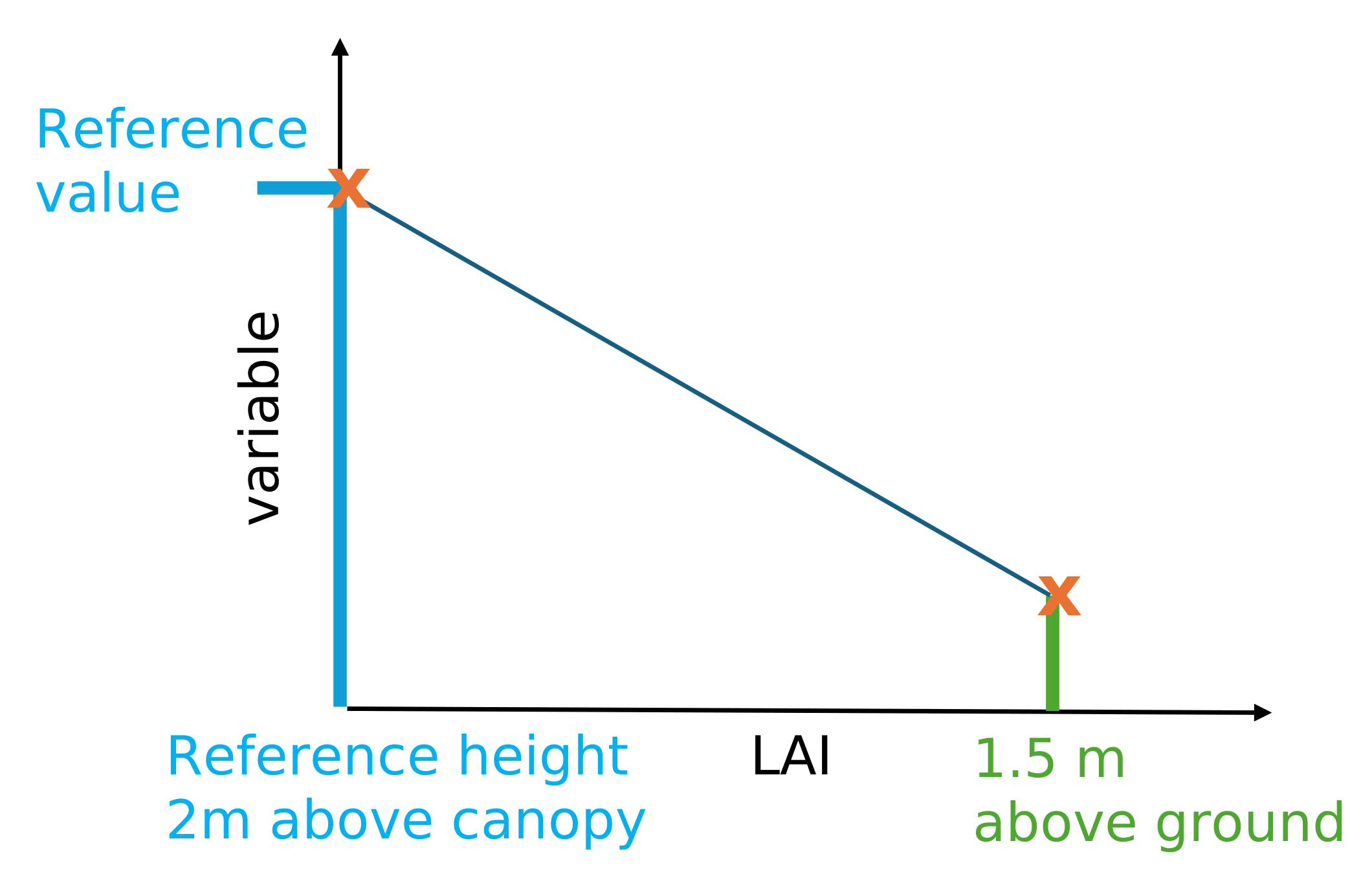
Fig. 6 Linear regression between leaf area index (LAI) and abiotic variables at measurement height, here 1.5 m above the ground. The y-axis is intersected at the temperature at reference height 2 m above the canopy. Orange crosses indicate measurement and reference height.#
Step 2: Interpolation above ground#
The values for any other aboveground heights, including but not limited to canopy layers and surface layer, are calculated by logarithmic regression (for wind speed) or exponential regression (for air temperature, relative humidity and vapour pressure deficit) and interpolation between the input at reference height 2 m above the canopy and the measured values at 1.5 m, see Fig. 7.
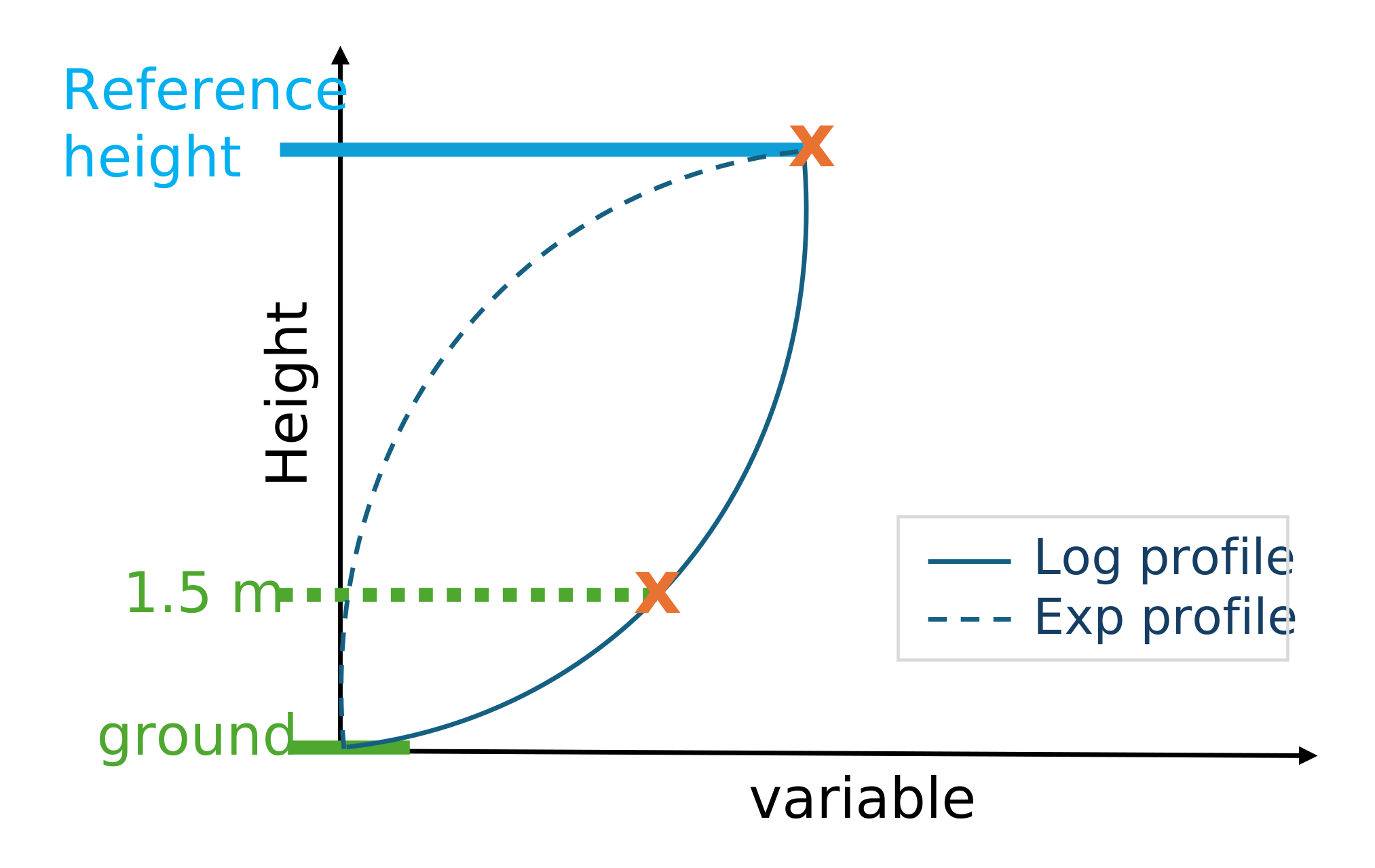
Fig. 7 Logarithmic (solid blue curve) and exponential (dashed blue curve) interpolation between abiotic variables at measurement height, here 1.5 m, and the reference height 2 m above the canopy. This approach returns values at any height of interest. Orange crosses indicate measurement and reference height as in Fig. 6.#
Step 3: Broadcasting constant atmospheric properties#
The model also broadcasts the reference values for atmospheric pressure and \(\ce{CO2}\) to all atmospheric levels as they are currently assumed to remain constant during one time step.
Step 4: Linear interpolation below ground#
Soil temperatures are interpolated between the surface layer and the temperature at 1 m depth which approximately equals the mean annual temperature, i.e. can assumed to be constant over the year.
Generated variables#
The calculations described above result in the following variables being calculated and saved within the data object, and then updated
Updated variables#
The link below provides the complete set of model variables that are updated at each model step.